
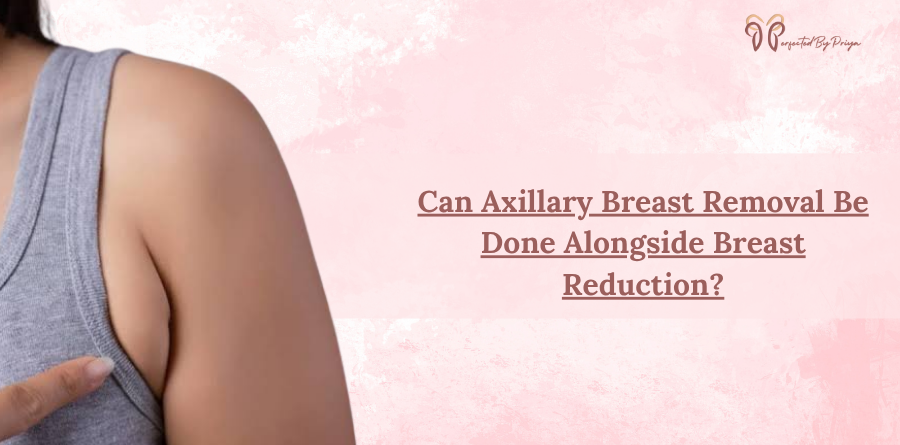
Can Axillary Breast Removal Be Done Alongside Breast Reduction?
Yes, axillary breast removal can be performed in the same surgical session as breast reduction. For the right candidate, combining both procedures is not only safe, it produces a more complete result. Whether combining is appropriate depends entirely on your anatomy, the extent of the axillary tissue, and your surgeon’s assessment. It is never an automatic add-on. But when it is recommended, the reasoning is worth understanding.
The Bulge That Breast Reduction Alone Cannot Address
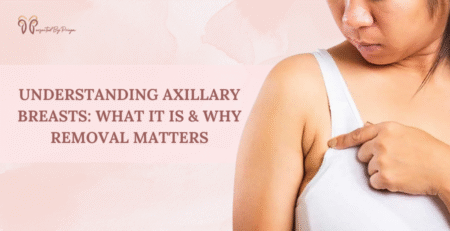
Axillary breast tissue is a relatively common anatomical variant. It refers to breast tissue that develops outside the main breast mound, most frequently in the armpit. It follows the same hormonal patterns as primary breast tissue. It can swell before menstruation, enlarge during pregnancy, and change with weight fluctuations.
Many women don’t understand that axillary breast tissue can be addressed. They describe a soft, sometimes uncomfortable bulge in the armpit that becomes more visible in certain clothing, or that rubs against the upper arm during physical activity. They have often attributed it to fat but it is breast tissue in an atypical location, and it behaves accordingly.
Why Leaving It Behind Creates an Unfinished Result
This is where surgical planning matters beyond the technical. A well-executed breast reduction reduces the central breast mound. The front profile changes significantly. But the silhouette is viewed from more than one angle, and the armpit area is visible in sleeveless clothing, activewear, and anything fitted across the upper body.
When axillary breast tissue is not addressed after a breast reduction, the result can feel disconnected. The breasts are smaller and better positioned, but the armpit bulge remains. For women who had imagined finally being able to wear sleeveless clothes comfortably, or to move through a workout without chafing or self-consciousness, this residual fullness can undermine a significant part of what they were hoping to achieve.
Addressing both in one procedure produces a contour that reads as coherent. The upper body looks proportionate from every angle, not just from the front.
What the Combined Procedure Actually Involves
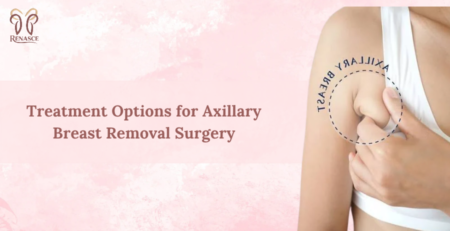
Axillary breast tissue removal typically involves a small incision placed within the natural crease of the armpit. The tissue is excised directly. If the volume is primarily fatty, liposuction may be used instead or in combination. The approach depends on the composition and extent of the tissue identified during your pre-operative assessment.
When performed alongside breast reduction surgery in India, the axillary breast removal component adds a modest amount of time to the procedure. The patient is already under anaesthesia. The surgical team is already prepared. The recovery period is not significantly extended beyond what breast reduction alone would require.
The Risk Question: Seroma, Nerve Sensitivity, and Arm Movement
When performed by an experienced surgeon, combining accessory breast tissue removal with other breast procedures is generally safe and can offer the advantage of a single recovery period.
With experienced surgical planning, risks can be minimised and managed effectively.
- Seroma Prevention: Careful surgical technique and aftercare help reduce fluid buildup. If it occurs, it is usually easy to treat.
- Nerve Protection: Sensory nerves are preserved whenever possible. Temporary numbness or sensitivity typically improves with healing.
- Arm Movement: Mild tightness is common initially and usually resolves with recovery and gentle movement.
- Lymphatic Safety: Proper dissection avoids key lymphatic structures, keeping the risk of long-term swelling low.
- Close Follow-Up: Regular reviews allow early detection and management of any concerns.
This Is Anatomy-Specific, Not a Default Recommendation
Not every patient undergoing breast reduction surgery in India has axillary breast tissue that warrants removal. Some have minimal accessory tissue that does not affect the final contour. Some have tissue that will respond adequately to liposuction without excision. The recommendation to combine procedures comes from clinical assessment, not from a philosophy of doing more.
What matters is that the possibility is identified and discussed before surgery, not discovered after, when a second procedure becomes the only remaining option.
Getting the Full Picture Before You Decide
Dr Priya Bansal’s approach to breast reduction always begins with a complete anatomical assessment. If axillary breast tissue is present and likely to affect your result, it will be discussed openly, with a clear explanation of what addressing it involves, what leaving it means for your final contour, and what the surgical plan would look like. The goal is never to expand the procedure unnecessarily. It is to ensure the outcome matches what you came in for. Book a consultation at Renasce to begin with a proper assessment.



Leave a Reply
You must be logged in to post a comment.