
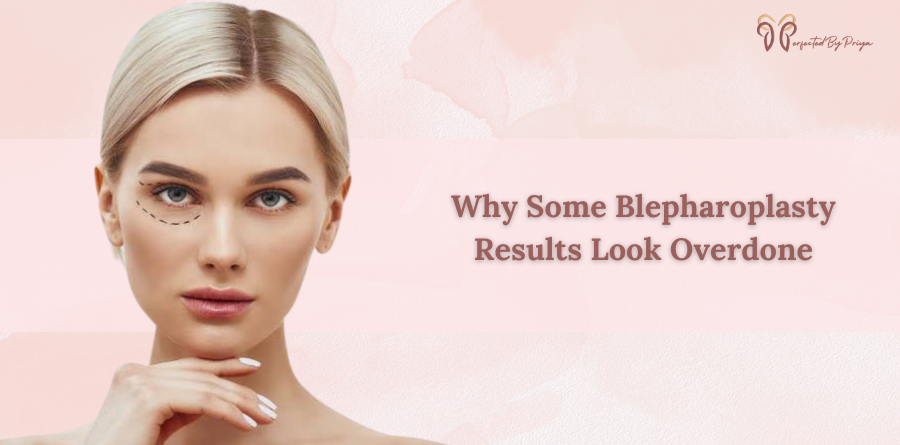
Why Some Blepharoplasty Results Look Overdone and How a Skilled Surgeon Avoids It
An overdone look after blepharoplasty almost always comes down to one thing: too much tissue removed, not the procedure itself. Older approaches to eyelid surgery often favored aggressive removal of skin and fat. Current practice has shifted toward a more conservative, tailored approach that protects both appearance and function.
The most common cause of an overdone blepharoplasty result is excess skin or fat removal, which can hollow the eye area or pull the lower lid out of place. Conservative, individualized planning is what keeps results looking natural rather than surgically altered.
The Myth Worth Retiring
Removing more tissue does not create a better result. Over-resection can leave the upper eyelid looking hollow, or pull the lower lid down enough to show white beneath the eye, an effect that can make someone look altered rather than refreshed, which defeats the entire purpose of blepharoplasty surgery.
This shift in thinking is not just cosmetic preference. It reflects a better understanding of how the eyelid actually functions, and how much tissue can safely be adjusted without compromising that function.
What Patients Actually Fear
- Ending up with hollow, sunken looking eyes
This comes from removing too much fat, which is why modern techniques favour preserving or repositioning fat rather than taking it out
- Looking permanently surprised
Usually the result of too much skin removed from the upper lid, avoided by conservative, tailored skin excision
- A pulled or tightened appearance around the lower lid
Linked to lower lid support, which is why a small supporting stitch is used in patients who need it
- Looking like a different person, not simply less tired
This happens when the eye is treated in isolation, rather than as part of the brow, eyelid, and cheek working together
Addressing these starts before surgery, not during it. The eye area is assessed as a whole, since what looks like excess eyelid skin is sometimes actually a lower brow position, which needs a completely different fix, not more skin removed from the eyelid itself.
How a Skilled Surgeon Prevents It
A conservative approach to upper eyelid surgery preserves enough tissue to avoid hollowing, while lower eyelid surgery focuses on repositioning rather than simply removing fat, since eye bags removal is often more about correcting position than taking tissue away. In select patients, a small supporting stitch at the outer corner of the eye helps keep the lower lid properly positioned during healing.
This kind of planning takes longer at the consultation stage, since it requires a genuine assessment of your eyelid, brow, and cheek together, rather than a quick estimate of how much skin to trim.










Leave a Reply
You must be logged in to post a comment.